Category: Comment

  • Closed by Covid-19

    Closed by Covid-19

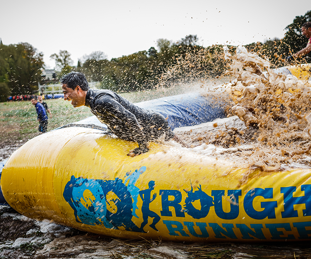
    It is with huge sadness that we learned that our client Rough Runner were forced to close their doors because of the ongoing Coronavirus Pandemic in 2020.

    Prior to the start of their 2020 season all mass sporting events were stopped by the UK Government, which led to a raft of cancellations for some participants, and deferring everyone else into 2021. The team—that we worked with so closely to create the proposition and brand—were furloughed to try and save the business, but the second wave of infections and continuing lockdowns meant that there was too much uncertainty. And we are gutted that they’ve had to close their doors for good.

    The team at Rough Runner were great people, they had families and homes, and we hope that they can all find something very soon. If you know anyone in events or construction that need some truly creative people, not afraid to work through the night to deliver, reach out to them through LinkedIn (just search for Rough Runner as a company).

  • A five year update

    A five year update

    For the past five years, Graphic Clinic has been resting. Still talking to our great clients from our first decade in existence, but instead we (and by ‘we’, I mean Brian) have been focussed on working in-house on some great digital products.

    Fully embracing User Centred Design was always a hard sell for us at Graphic Clinic. Our size meant we could give great service to our clients, but it also meant that the time to fully explore what our clients needed by talking to their customers was normally beyond their budget. We would do all we could within the limitations of their purses, but we felt we could do more.

    The chance to work with Kallidus in Cirencester came up, a full-time opportunity to redesign an online learning platform, so the difficult decision was made to halt all other client work. Throwing all the time available into the one project, for the next two years, led to great results and even an Award for Best Learning Product from the UXUK Awards. The work we did helped secure the businesses long-term future and regain their place in the competitive landscape, helping secure client contracts with Morrisons, Weetabix, Sainsburys and more.

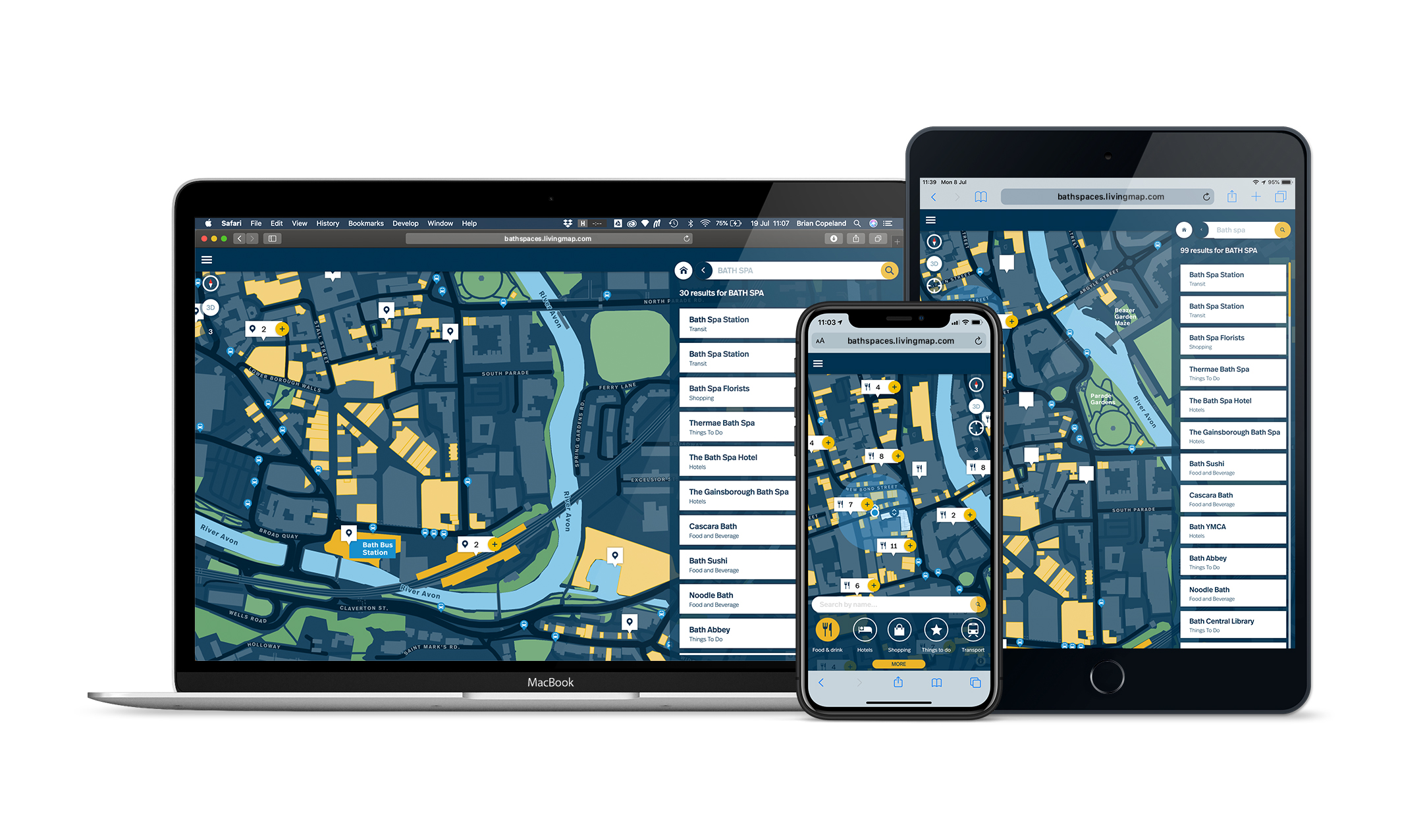
    A three month research project with Pixie App — a digital rewards platform for Independent Retailers — led to another two year project with Living Map, a Bath based digital mapping provider. Working on a map and interface redesign of the core product, and an integration of their technology for STAR Alliance Airline Group that will assist long-haul passengers with flight connections across the world.

    We have come to rest, at the time of writing, at Colateral. Working on another redesign of an incumbent (first generation) software platform, helping to shape the future of their digital platform through solid User Research and good User Centred Design practices.

    If you have a digital product that needs to be brought up to date, to meet the competitive landscape of your industry, please get in touch. We have become quite adept at understanding the users real problems and redesigning digital products to meet the new problems uncovered. Call Brian for a chat.

  • What we mean by ‘strategy’

    Strategy is a much lauded work in consultancy, as such it means many things to many people. So here’s our take on what is strategy and the consultancy we offer when it comes to the use of this word.

    Strategy, to us, is about devising a plan to help our clients take their product to market. But sometimes it goes even higher than that, it’s a pre-product decision. Our most effective consultancy (on strategy) comes when the product hasn’t been designed yet, let alone the marketing strategy to sell that product.

    Let us elaborate.

    Our most successful client relationship to date is with a financial services company who came to us with an outline of their business. They knew the sector to which they were going into and they had enlisted a group of stakeholders and investors who liked their idea.

    The first job was to work out with this group (of 15+ individuals across 9 businesses) a consensus for what this company was going to ‘be’. Not the obvious ‘be’ of being a financial services provider, but the ‘be’ of culture. What type of business were they going to create. Our work here was about extracting from those individuals what each of them thought in an open forum with their peers, analysing and seeking agreement across all stakeholders to ensure that everyone was on the same page.

    Now we knew what kind of a business we were creating the strategy for we could move on to analysing values, developing personality traits; putting in place the brand strategy. What this essential first-step did was give a central reference point for all future business decisions. It afforded them a clear grounding and a clear direction for growth and has helped them define their proposition ever since.

    In short, an effective strategy.

  • 8 years in the making

    We’ve been so busy of late we have zoomed right past out 8th birthday with barely a whiff of a cake, not even a cup cake.

    Tsk tsk!

    So without further ado, Happy Birthday to us!

    A huge thanks to all our clients, from the last year and previous years. We wouldn’t be here without your support and trust.

  • TwentyTwelve: Happy New Year everyone

    We’d like to wish all our clients and contacts the very best for the coming year. With the plans that you have in the pipeline we’re as excited as you are about what the next twelve months will bring. Onwards and upwards!

    We’ll have some nice new work to showcase too, and if you’re a potential client, wondering if we’re the right design team for you, then please get in touch for a no obligation chat/meeting about how we work and what we could do for your business.

  • Why you (as a small business) shouldn’t be scared of the word “Brand”

    For the last two decades, at least, the big worldwide marketing and design groups – like Ogilvy, Interbrand and WPP – have been espousing the virtues and powers of the brand and charging handsomely for their wisdom. The list of multi-million pound rebrands is as endless and the figures quoted for the work. The resulting feeling amongst the rest of the business world (outside the FTSE250) is that branding is big bucks stuff. That your marketing budget needs to be as bloated as Mr Creosote to even consider uttering that fabled 5 letter word. You can almost feel the vibrations when marketing directors and business owners across the country shudder in fear when their new designer asks them for a copy of their “brand guidelines”. How could they ever afford to have such a weighty tome prepared for them? Surely to do so would require a grovelling trip to the bank manager with an embarrassing retreat as they are laughed from the building?

    I’m here to tell you that that fear is a load of tosh. The fact is that branding shouldn’t cost the equivalent of an African dictators golf buggy. It is affordable, surprisingly affordable.

    Here’s why. Brand strategists work hand in hand with graphic designers to build a brand. They do much of the initial thinking and the designer does the rest. He or she is then the one that pulls together these biblical “guidelines” documents. They are the ones who work on the colour relationships, the typefaces, the tonal variations, the uses in varying territories, the image style banks and so on. As such they become strategists themselves, able to advise the client in the absence of their colleague on a whole host of related issues. But these minds don’t always stay at the big firms forever, the get restless and move on, or better still – set up on their own.

    Of course there is a reason the big agencies can charge such high fee’s. It’s because getting a brand right and applying it well across all customer channels can add noughts onto a companies bottom line. Coca-Cola, for example, through consistently excellent application of it’s brand to it’s product has grown to have a brand value of £70.4bn (src: Interbrand “Best Global Brands Report 2010). That’s some serious numbers!

    So here’s the tip. Seek out a graphic designer who has experience dealing with big “brands” but who now works for a small firm, or themselves. Then you can get all the big thinking for an affordable price. And remember, don’t fear the word; embrace it and your company will be much better off for the investment.

  • Designers: Continual evolution of skills is essential

    I’m a member of a few groups on Linkedin that I watch and often ignore, but one recent thread has compelled me into a rare opinion piece/blog.

    The question — or concern for many — is, how can a designer be expected to do everything in the “Graphics” field from print design to HTML coding, from animation to advertising? In my opinion there are two reasons why we must have, at the very least, a working knowledge of the areas that overlap out own.

    Firstly there is the economics. In the west, unless I’m off the beat, we’re fighting to come out of a recession and for a client and employer every penny counts. Banks have cut off access to much of the funding that might have seen them through a quiet, or cashflow weak, few months or quarters and so ever-more-so they are watching their spending like hawks. We all know in this industry how marketing budgets are the first to be cut when the big R rears its ugly head. Why pay for an agency or employee who can only do you a printed brochure and another who will build your website and a third who will do your advertising campaign when you can get one to handle all three? Whereas this thinking was once the realm of the big agency — which seems to still operate this way — for whom the big clients with big budgets go to; it is now the case that small to medium sized companies are seeking this kind of one-stop-shop offer too but at the price point they can afford. Can a smaller design agency therefore afford not to be able to offer clients everything under one roof?

    What seems to have been the way around this of late has been to supplement your own skills with those of freelancers, where you might bring in a copywriter and a developer to deliver on a larger website, it now seems these freelancers are being squeezed into having to be able to do more than just their core skill set. Agencies are asking their annual report team to (also) deliver the online version of the report, to save on outsourcing, to keep the cashflow within the company — and ultimately ensure the job security of those employees. Which begs the question: How can you complain about  being asked to do more than your personal core skills when your employer is doing it to ensure they can still pay you?

    Secondly there is the industry itself. Since it began it’s changed. Once designers used a paint brush like Toulouse Lautrec and type was hand drawn. Once designers had a handful of typefaces to select depending on what the printers had bought. They had to learn to use Letraset. They had to embrace the Mac. The bottom line? It’s evolving, it always has and it always will.

    What seems to be the problem for many at the moment is that they didn’t see this evolution as applicable to them. They started designing or taking their degree when Macs we’re becoming the norm, when older designers were coming to terms with this new tool in their design arsenal. They had the jump on those older designers. They had the luxury of youth and an appetite to learn Photoshop 2 and Pagemaker, they picked up Quark and it was easy to learn it. They revelled in the new technology as the MTV generation and didn’t see that the older established designers were fighting to keep up with them — but they did, eventually. They spent their first few years in the industry cutting their teeth and learning that the client wants one thing and often needs another, all lessons that you just don’t learn in college. And then it seems they stopped thinking that had to keep learning. That they had done enough to be a proficient design in one area of the industry.

    Perhaps they worked at a big agency and this wasn’t required? I know the same happened to me. I moved from a print agency, where I produced Annual Reports, to a digital agency at the height of the Dotcom boom. I spent 4 years with them designing websites, producing animated intro’s (so 1999!) and yet never getting any print projects despite asking for them and being more than capable of doing them. But is that a valid excuse for not knowing about print process? or web design? or SEO? or how to produce an exhibition stand?

    These mid-30’s and early 40’s designers (alas) must learn to learn again. To seek out the knowledge online about each area that they feel short in — and in this day and age there’s so much information freely available online that there is little excuse for not finding it — and learn.

    Ultimately they need to evolve and keep on evolving, for our industry will never stand still and our clients will eventually be forced to embrace every new channel that their customers use to access their brands. So unless you want another designer with the right knowledge to do the work the client needs it’s time to restart your education.
  • No sun for us. We’ve had a busy summer.

    It’s been a while since we added some new work to our site, which is a shame, but we’re snowed under at the moment so the chances of getting anything online soon are slim. Of course being busy is good, and we’re delighted to be so. So here’s a quick overview of the last couple of months here at Graphic Clinic.

    We completed a set of album, single and promo designs for 100% Records artist Matisyahu for the UK release of his US hit album “Light” in May.

    In June we produced a gorgeous DVD cover design for Naomi Campbell in gold and silver to celebrate her 40th birthday celebrations.

    July saw us working on the development of our own iPad application – more news will follow soon we hope. We also finalised some logo designs for The Remedi, a designer clothing e-commerce site, and helped them implement the new ‘branding’ into their online shop. We also revamped our client Goldrealm Properties website for Coodham Estate in Ayrshire, a stunning redevelopment of a stately home, and we’ve continued to deliver ongoing design and marketing support for our more regular clients in the financial sector.

    Nucleus, for whom we created their brand over 4 years ago, hit a major milestone in their business aims by reaching a massive £1.5bn + of assets under management on their WRAP platform. A figure that means the business is now profitable, which for a financial services start-up is rather impressive, and we’re delighted to have played a part in their success.

    We also started working for Easy Gourmet, an established ‘high end’ catering and events company based in East London. More new to follow once we finalise their brand strategy and get a new identity developed.

    And that’s not all. We’re putting the finishing touches on an ad campaign for a major pop groups’ new business venture and will be helping the further development a new sports management system with Rocket Sports. All very exciting.

    Phew. Now, back to work!