Author: Brian Copeland

  • 6 years in business

    The 3rd November 2011 marked the start of the 7th year of business and the end of the 6th. We’ve had a very busy year and so would like to thank everyone who’s helped ensure we keep on trucking. We’ve produced websites, exhibitions, complete brand reviews, office signage, cards, moved into our own office and so much more in the last 12 months.

    Here’s to another year of working with the best clients a designer could wish for!

  • Office move: Studio 3, 8a Barlett Street, Bath

    Yahoo, the BT engineer has just left and we’re all set up in the new office. We’re very grateful to our old “landlords” at the Dispensary, where we were based for just under a year but the time came to spread our wings and move into a bigger office space – where we can store all those Workbooks and the myriad of paper samples and design books/vernacular that we collected over the years. So for the forseeable future our new home is in Studio 3, 8a Barlett Street, Bath right in the middle of town, a stones throw from the shops and surrounded by great cafés and sandwich shops.

    If you are visiting us here and you’re coming by car we recommend trying to park on Albert St as our street is all double yellow lines.

  • Why you (as a small business) shouldn’t be scared of the word “Brand”

    For the last two decades, at least, the big worldwide marketing and design groups – like Ogilvy, Interbrand and WPP – have been espousing the virtues and powers of the brand and charging handsomely for their wisdom. The list of multi-million pound rebrands is as endless and the figures quoted for the work. The resulting feeling amongst the rest of the business world (outside the FTSE250) is that branding is big bucks stuff. That your marketing budget needs to be as bloated as Mr Creosote to even consider uttering that fabled 5 letter word. You can almost feel the vibrations when marketing directors and business owners across the country shudder in fear when their new designer asks them for a copy of their “brand guidelines”. How could they ever afford to have such a weighty tome prepared for them? Surely to do so would require a grovelling trip to the bank manager with an embarrassing retreat as they are laughed from the building?

    I’m here to tell you that that fear is a load of tosh. The fact is that branding shouldn’t cost the equivalent of an African dictators golf buggy. It is affordable, surprisingly affordable.

    Here’s why. Brand strategists work hand in hand with graphic designers to build a brand. They do much of the initial thinking and the designer does the rest. He or she is then the one that pulls together these biblical “guidelines” documents. They are the ones who work on the colour relationships, the typefaces, the tonal variations, the uses in varying territories, the image style banks and so on. As such they become strategists themselves, able to advise the client in the absence of their colleague on a whole host of related issues. But these minds don’t always stay at the big firms forever, the get restless and move on, or better still – set up on their own.

    Of course there is a reason the big agencies can charge such high fee’s. It’s because getting a brand right and applying it well across all customer channels can add noughts onto a companies bottom line. Coca-Cola, for example, through consistently excellent application of it’s brand to it’s product has grown to have a brand value of £70.4bn (src: Interbrand “Best Global Brands Report 2010). That’s some serious numbers!

    So here’s the tip. Seek out a graphic designer who has experience dealing with big “brands” but who now works for a small firm, or themselves. Then you can get all the big thinking for an affordable price. And remember, don’t fear the word; embrace it and your company will be much better off for the investment.

  • Designers: Continual evolution of skills is essential

    I’m a member of a few groups on Linkedin that I watch and often ignore, but one recent thread has compelled me into a rare opinion piece/blog.

    The question — or concern for many — is, how can a designer be expected to do everything in the “Graphics” field from print design to HTML coding, from animation to advertising? In my opinion there are two reasons why we must have, at the very least, a working knowledge of the areas that overlap out own.

    Firstly there is the economics. In the west, unless I’m off the beat, we’re fighting to come out of a recession and for a client and employer every penny counts. Banks have cut off access to much of the funding that might have seen them through a quiet, or cashflow weak, few months or quarters and so ever-more-so they are watching their spending like hawks. We all know in this industry how marketing budgets are the first to be cut when the big R rears its ugly head. Why pay for an agency or employee who can only do you a printed brochure and another who will build your website and a third who will do your advertising campaign when you can get one to handle all three? Whereas this thinking was once the realm of the big agency — which seems to still operate this way — for whom the big clients with big budgets go to; it is now the case that small to medium sized companies are seeking this kind of one-stop-shop offer too but at the price point they can afford. Can a smaller design agency therefore afford not to be able to offer clients everything under one roof?

    What seems to have been the way around this of late has been to supplement your own skills with those of freelancers, where you might bring in a copywriter and a developer to deliver on a larger website, it now seems these freelancers are being squeezed into having to be able to do more than just their core skill set. Agencies are asking their annual report team to (also) deliver the online version of the report, to save on outsourcing, to keep the cashflow within the company — and ultimately ensure the job security of those employees. Which begs the question: How can you complain about  being asked to do more than your personal core skills when your employer is doing it to ensure they can still pay you?

    Secondly there is the industry itself. Since it began it’s changed. Once designers used a paint brush like Toulouse Lautrec and type was hand drawn. Once designers had a handful of typefaces to select depending on what the printers had bought. They had to learn to use Letraset. They had to embrace the Mac. The bottom line? It’s evolving, it always has and it always will.

    What seems to be the problem for many at the moment is that they didn’t see this evolution as applicable to them. They started designing or taking their degree when Macs we’re becoming the norm, when older designers were coming to terms with this new tool in their design arsenal. They had the jump on those older designers. They had the luxury of youth and an appetite to learn Photoshop 2 and Pagemaker, they picked up Quark and it was easy to learn it. They revelled in the new technology as the MTV generation and didn’t see that the older established designers were fighting to keep up with them — but they did, eventually. They spent their first few years in the industry cutting their teeth and learning that the client wants one thing and often needs another, all lessons that you just don’t learn in college. And then it seems they stopped thinking that had to keep learning. That they had done enough to be a proficient design in one area of the industry.

    Perhaps they worked at a big agency and this wasn’t required? I know the same happened to me. I moved from a print agency, where I produced Annual Reports, to a digital agency at the height of the Dotcom boom. I spent 4 years with them designing websites, producing animated intro’s (so 1999!) and yet never getting any print projects despite asking for them and being more than capable of doing them. But is that a valid excuse for not knowing about print process? or web design? or SEO? or how to produce an exhibition stand?

    These mid-30’s and early 40’s designers (alas) must learn to learn again. To seek out the knowledge online about each area that they feel short in — and in this day and age there’s so much information freely available online that there is little excuse for not finding it — and learn.

    Ultimately they need to evolve and keep on evolving, for our industry will never stand still and our clients will eventually be forced to embrace every new channel that their customers use to access their brands. So unless you want another designer with the right knowledge to do the work the client needs it’s time to restart your education.
  • Original Designers Workbook App

    There’s an App for everything, apparently.

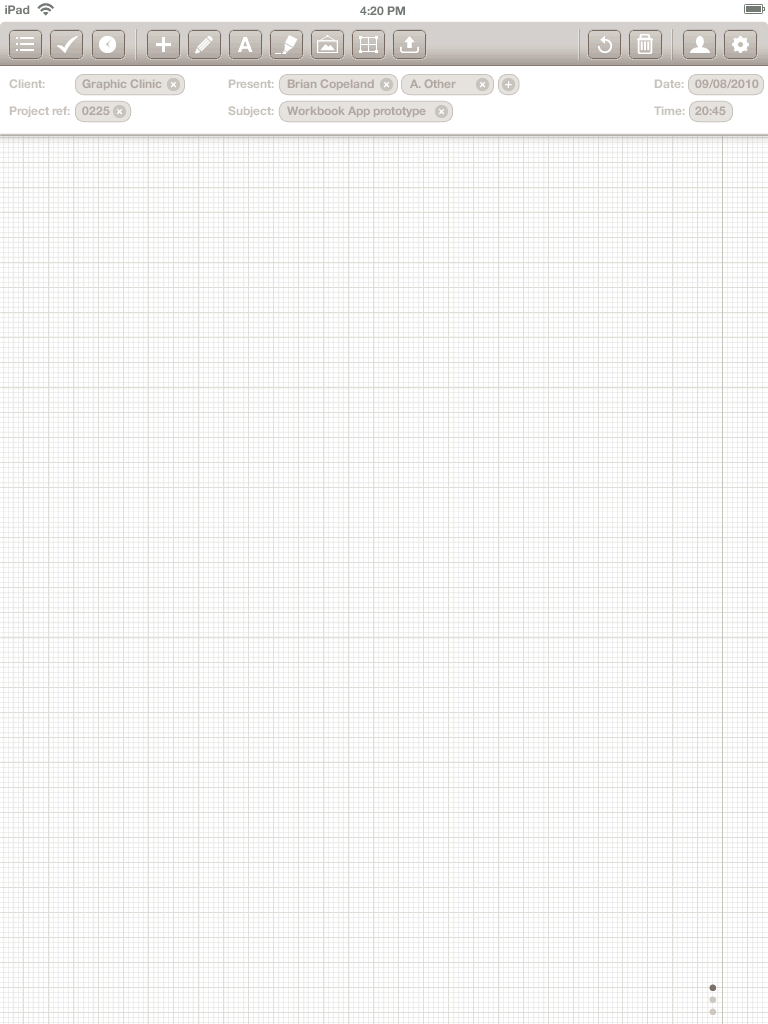
    Well no there’s not, there’s not an Original Designers Workbook App — yet! So we thought we should rectify that and get designing and planning. And we did.

    With clear ideas of functionality that will be invaluable to the creative industry our planned digital Workbook will let users create notes that they can search, track, share, edit and assign. We are now seeking a digital partner to help us get the Original Designers Workbook App to market on both iOS and Android who will share in the success of this unique and proven product.

    There is more information on our dedicated ODW App page, with a couple of sneak preview visuals. If you are an iOS or Android developer and interested in a partnership agreement, please get in  touch.

  • English Heritage timeline concepts

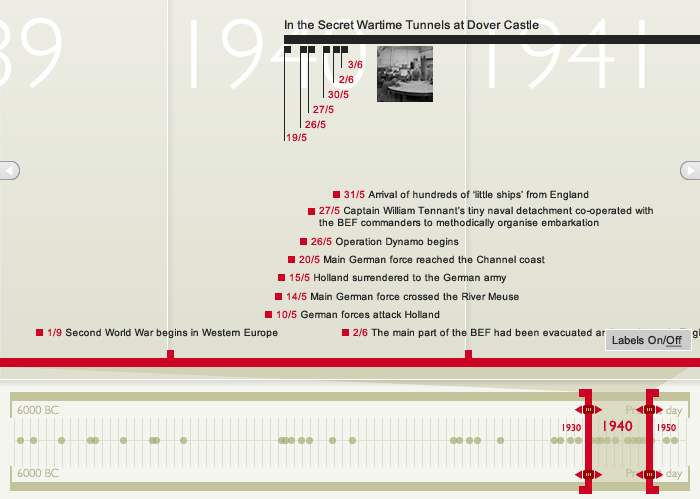
    I was recently invited by Glasgow based Digirati to submit designs for a timeline they’re producing for their client English Heritage. There was quite a lot of information required to create a flexible timeline that can be used for all the organisations properties, allowing for multiple timelines within the main timeline and a global timeline and scaling options. The solution was to extract elements from the EH logo to form the main red timeline and try to indicate on the global timeline where clusters of information were thus helping guide users to points worth exploring. Visually it’s all kept very much on-brand with the EH guidelines to ensure the timeline sits comfortably into the website. The brilliant guys at Unwrong in Brighton will be doing the build in Flash.

  • Another LongLunch

    I don’t mention it often on this site, in fact, I’m struggling to think of ever mentioning it, that I am a founding member of LongLunch. LongLunch is me and a few design chums that give up our spare time to arrange lectures (more like informal talks) by prominent graphic designers in either Scotland or London. Over the years we’ve hosted some of the biggest names in design, such as Peter Saville, Tomato, Airside, Bibliothèque and so many more. Full details of all our speakers can be found on the LongLunch website.

    There are currently 4 of us as ‘directors’ of LongLunch, myself, Andrew Neely, Rufus Spiller and Andrew Massey. We all used to live and work in Scotland, but now Andy M and myself have moved away but we still get involved to help out the design community where we started our careers.

    Our next talk is from the current European Design Agency of the Year, Dutch consultancy LAVA. The talk is on the 5th May at the Glasgow School of Arts Mackintosh lecture theatre and tickets are on sale now via the LongLunch website.

    We’re hoping to host them in London later in the year, along with a talk from designer-of-the-moment Michael C. Place (Build), though we’ve yet to agree dates and details with him.

  • 5 years in business

    Wow, that flew by! 5 years? 1,825 days (well 1,827 at the time of writing) of Graphic Clinic – formerly North & East.

    It’s been an incredible journey with some changes along the way. Huge thanks to everyone who’s been involved to date, whether client, friend, freelancer or confidante, you’re help has meant we go this far. Here’s to being halfway to double figures! Now, where did we put the Bolli?

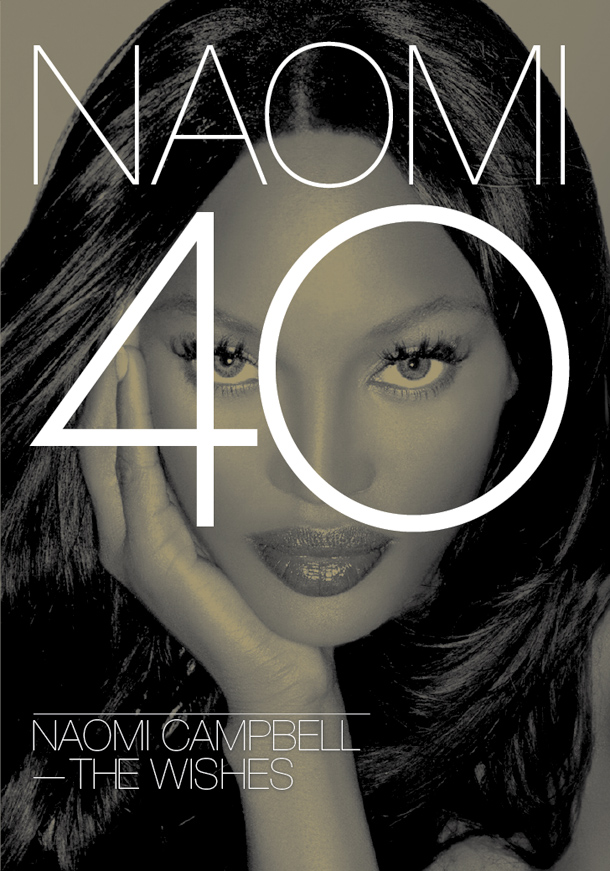
  • Naomi Campbell 40th birthday DVD

    Naomi Campbell 40th birthday DVD

    Naomi Campbell DVD cover Can she really be 40? Well, it would appear so, and in true Supermodel style she threw a big party, filmed it, and then needed a nice cover that was a stunning as she was (er, is!). Not a bad brief really. She, and her partner, apparently loved it. Printed onto gold paper for the extra super shine.

  • New ad campaign for Sugababes

    We were asked in the summer to help Rachel at Rebel State pull together an ad campaign for the new Sugababes fragrance collection. We worked alongside the photographer, retoucher, client and her clients (the Sugababes, their management and the fragrances company) to put together a classic design for the girls working with the packaging designs already produced.